
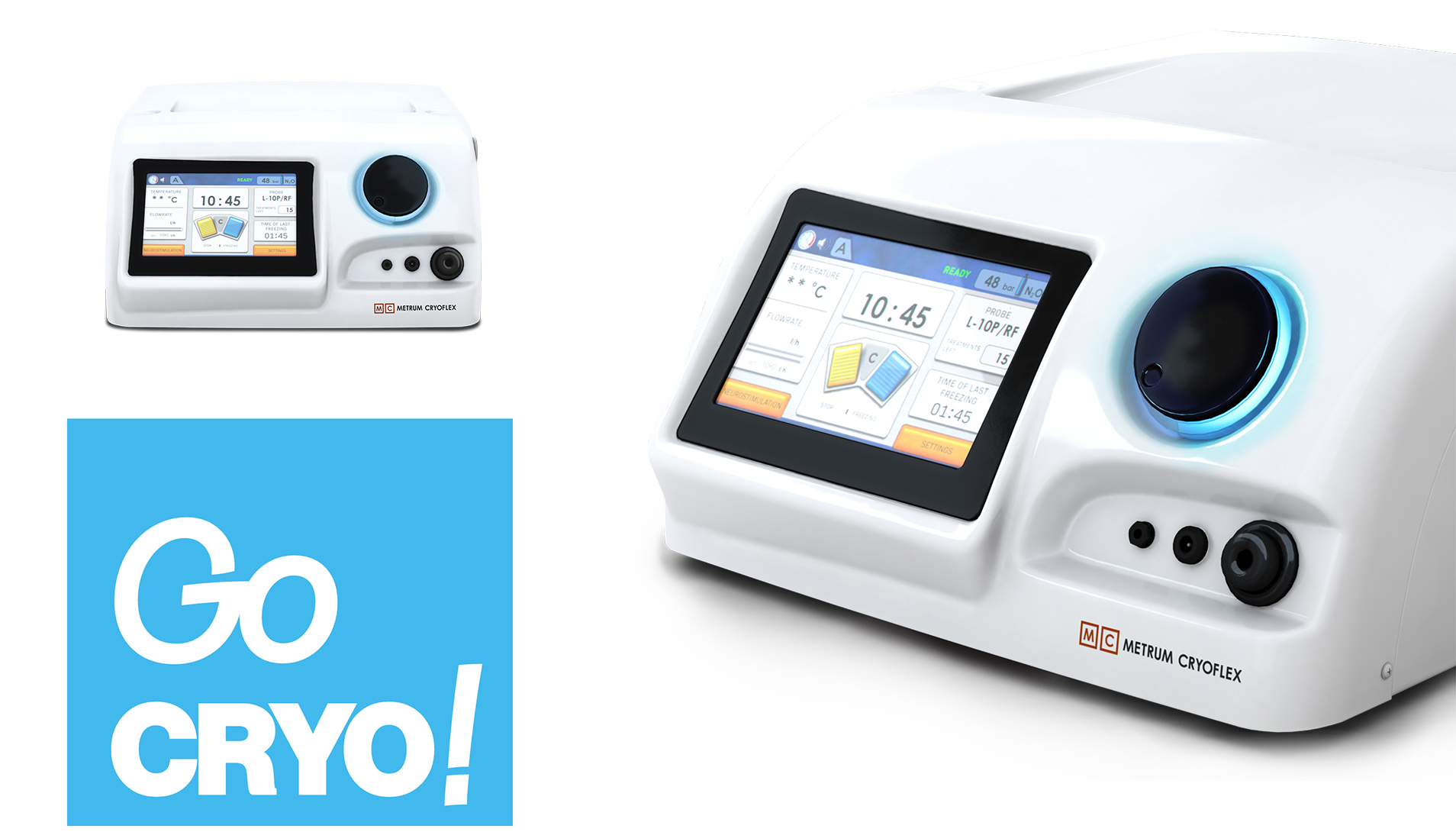
CRYO-S Painless is the advanced cryoanalgesia system from METRUM CRYOFLEX, which helps reduce postoperative pain through the controlled, temporary cooling of peripheral nerves.
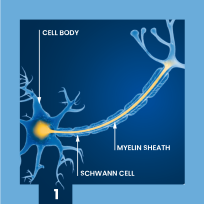
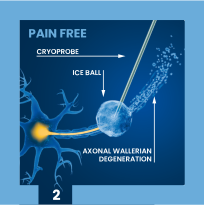
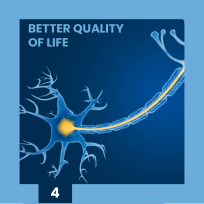
During cryoanalgesia the nerve is cooled in a targeted, controlled manner. The low temperature temporarily inhibits the conduction of pain signals while the structure of the nerve is preserved and the nerve fibres regenerate naturally.
Benefits of cryoanalgesia
- Significant and lasting reduction of postoperative pain
- Reduced use or avoidance of opioid analgesics in the postoperative period
- Reduced need for epidural analgesia
- Shorter catheterisation and drainage times
- Earlier mobilisation and faster respiratory and musculoskeletal rehabilitation
- Reduced risk of postoperative pain becoming chronic
- Shorter hospital stay
Clinical applications
CRYO-S Painless can be used, among others:
- For intraoperative intercostal nerve cryoanalgesia during surgical correction of chest wall deformities, for example Nuss and Ravitch procedures, pectus excavatum and complex thoracic deformities.
- During thoracic surgery, via a thoracoscopic approach or thoracotomy, including lobectomy, segmentectomy and other resection procedures.
- During cardiac surgery, via a thoracoscopic approach or alongside thoracotomy, for example MIDCAB and mitral valve replacement.
- In trauma care, for cryoanalgesia of the chest wall, for example with rib and sternal fractures or multiple injuries.
- For ultrasound-guided, percutaneous intercostal nerve cryoanalgesia.
- For the treatment of chest wall pain, including post-thoracotomy neuroma, post-mastectomy pain, persistent pain following rib fracture, and neuralgia caused by thoracic herpes zoster.
Precise and safe cryoprobes
CRYO-S Painless can be used with cryoprobes designed for different anatomical approaches.
The gold-plated Golden Tip freezing tip is shaped to follow the anatomical position of the targeted nerve. The precisely controlled freezing zone is concentrated at the end of the cryoprobe, enabling targeted nerve treatment while protecting the surrounding tissue.
At just 3 mm in diameter, the cryoprobe can be introduced through a small incision, in some procedures without trocar access.
How cryoanalgesia works
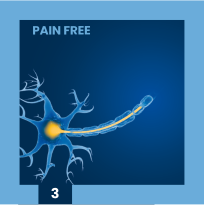
Cryoanalgesia creates a controlled freezing zone around the nerve. The treatment induces temporary nerve injury at the level of the axons and thereby blocks sensory nerve conduction.
As a result, the nerve signalling that carries the sensation of pain is temporarily interrupted.
The treatment is reversible: the nerve fibres regenerate naturally, so the physiological function of the nerve is gradually restored.
CRYO-S Painless – advanced control, simple operation
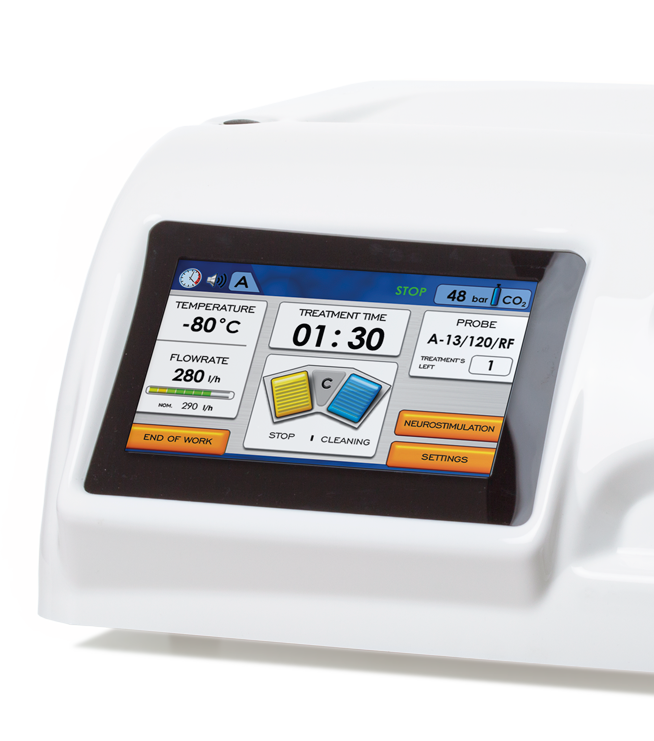
The device runs on a microprocessor-controlled system that regulates the freezing process automatically. Key functions:
- RFID-based microprocessor communication for automatic cryoprobe identification and setting of the freezing algorithm
- Voice prompts to support the procedure
- Option to use N₂O or CO₂ medical gas
- Touchscreen control
- Separate foot pedal with start and stop functions
- Integrated neurostimulation module
- Can be mounted on a trolley or a laparoscopic tower
- Compact design weighing only 12 kg
Automatic flow calibration and the maintenance of the lowest possible temperature reduce the need for operator intervention. The operator simply sets the desired treatment time and starts the process.
METRUM CRYOFLEX – Precise technology. Gentler procedures.